Nine in ten of the people who use Skynat Live — churches, events, schools, businesses and creators — are perfectly served by the $ yearly plan. It already gives broadcast-quality pictures, Enhance, the virtual studio with 3D depth and remote cameras; the difference Max makes is one a trained eye sees. Max is for large broadcasting enterprises — news stations, mega churches, big music events and channels — that want the last degree of depth and detail, and have the powerful computer it needs. $ a year or $ a month.
The pack is a signed list of files with their sizes and hashes; the app verifies the signature and every file before a pack is used. Nothing executable is ever downloaded, and a better model is a new pack, never a new app.
A list of feature names tells you nothing. Here is the problem each one solves, and what the show looks like without it.
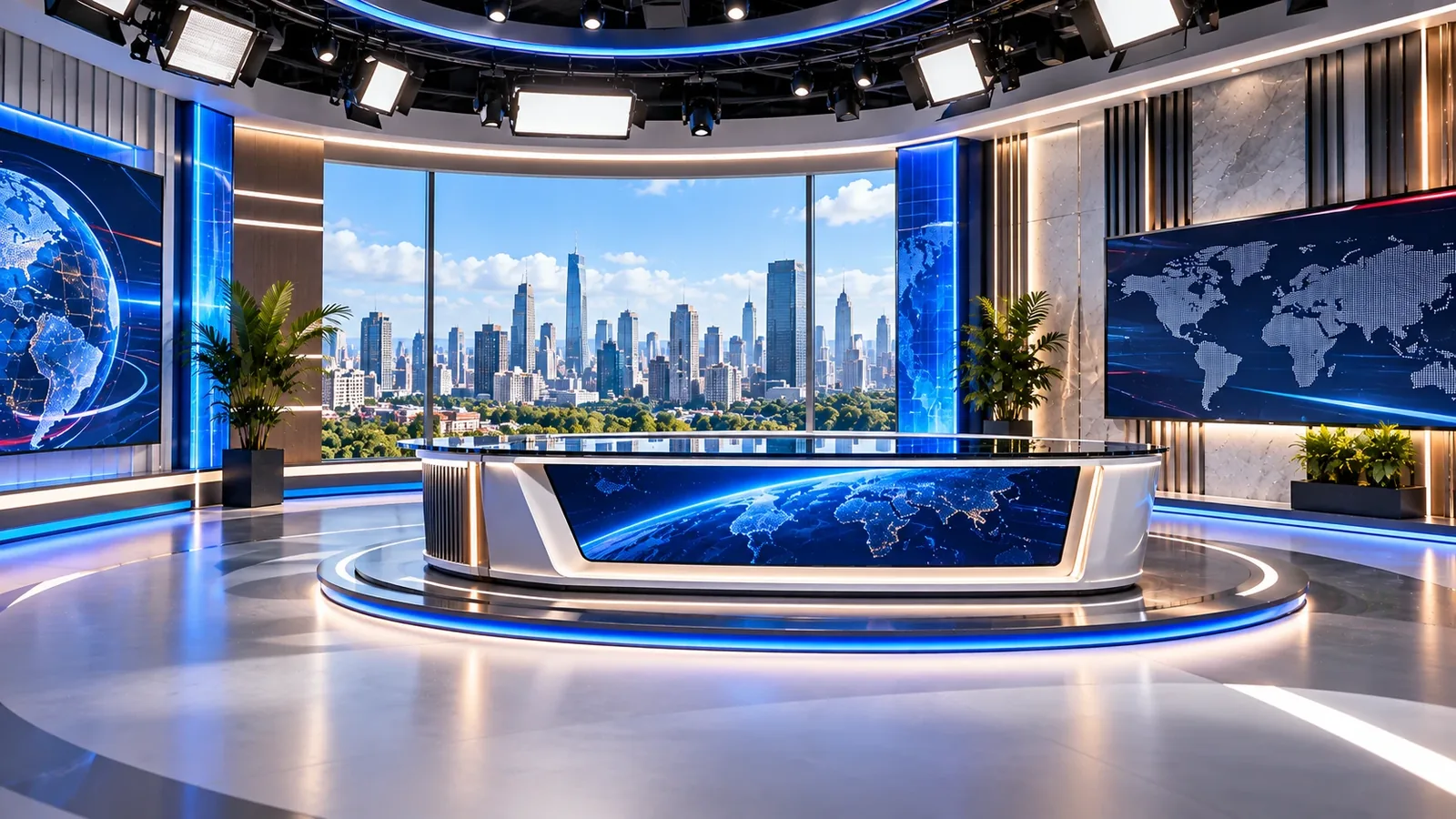
The yearly plan is the whole studio: every camera, the audio console, colour, graphics, streaming, recording, Enhance, the virtual studio with 3D depth and remote cameras. Max adds the last layer of detail — hair strand by strand on a green screen, the set’s light and your real shadow on you, real rooms as sets — and it asks a lot of the computer to do it. A small or medium church, a school, a creator or an event company will not see enough difference to justify it.
Choose Max when: you run a large production — a news station, a mega church, a big music event or a channel — you want every last detail, and you already have (or will buy) the machine it needs.
Max runs neural models on every frame, on the graphics card. On a Mac that means a MacBook Pro, Mac mini Pro or Mac Studio with an M1 Pro or newer and 16 GB or more — not a MacBook Air. On Windows it means a strong graphics card — an RTX 3060 or better, ideally a gaming PC — not a typical office laptop. The app checks the machine before it switches each Max feature on, and says plainly when one cannot run.
Which is why: we do not recommend Max to everyone: on an ordinary computer the yearly plan is the better choice, and it is the one we built for most people.
One machine runs the show. Others on the same network join it with a code and work the switching, the graphics or the audio — or all three — mirroring what the main machine is doing. Two or three people at one production, each on their own computer, through the same open control API a Stream Deck uses.
In practice: the pastor’s assistant runs lower thirds and headlines from the back row while the operator switches cameras.
The standard app turns speech into captions on the computer with a small model. Max reads the larger model from the pack, on the graphics card where there is one: fewer mistakes on names, accents and quiet rooms.
Which matters because: a caption with the preacher’s name wrong is worse than no caption.
Beside the broadcast keyer, Max runs a second opinion on the edge — where the screen’s own matte is unsure, at the fringe of hair and the edge of a shoulder, the presenter’s true edge is read from the picture itself. Fine hair against green stays fine hair; nothing of the screen is let through. And with no screen at all, the same eye cuts the presenter out of an ordinary room with an edge the standard cut-out cannot match.
What you see: hair that is hair, not a hard outline; a wisp against the window in the set behind.
The depth engine every Skynat Live has puts you in a room with depth. Max makes that room light you. Your real shadow, the one you throw on the green screen, is cast onto the set’s floor and wall at the angle the set’s light would throw it. The set’s light falls on you — warm in a warm room, cool in a cool one, its glow along your edge. The presenter takes their own shape rather than a flat cut-out, so a desk hides exactly what a desk would hide and the light rolls across a shoulder before a chest. Nothing to download for any of it.
Which matters because: the eye knows in a tenth of a second whether a person and a room share a light. Now they do.
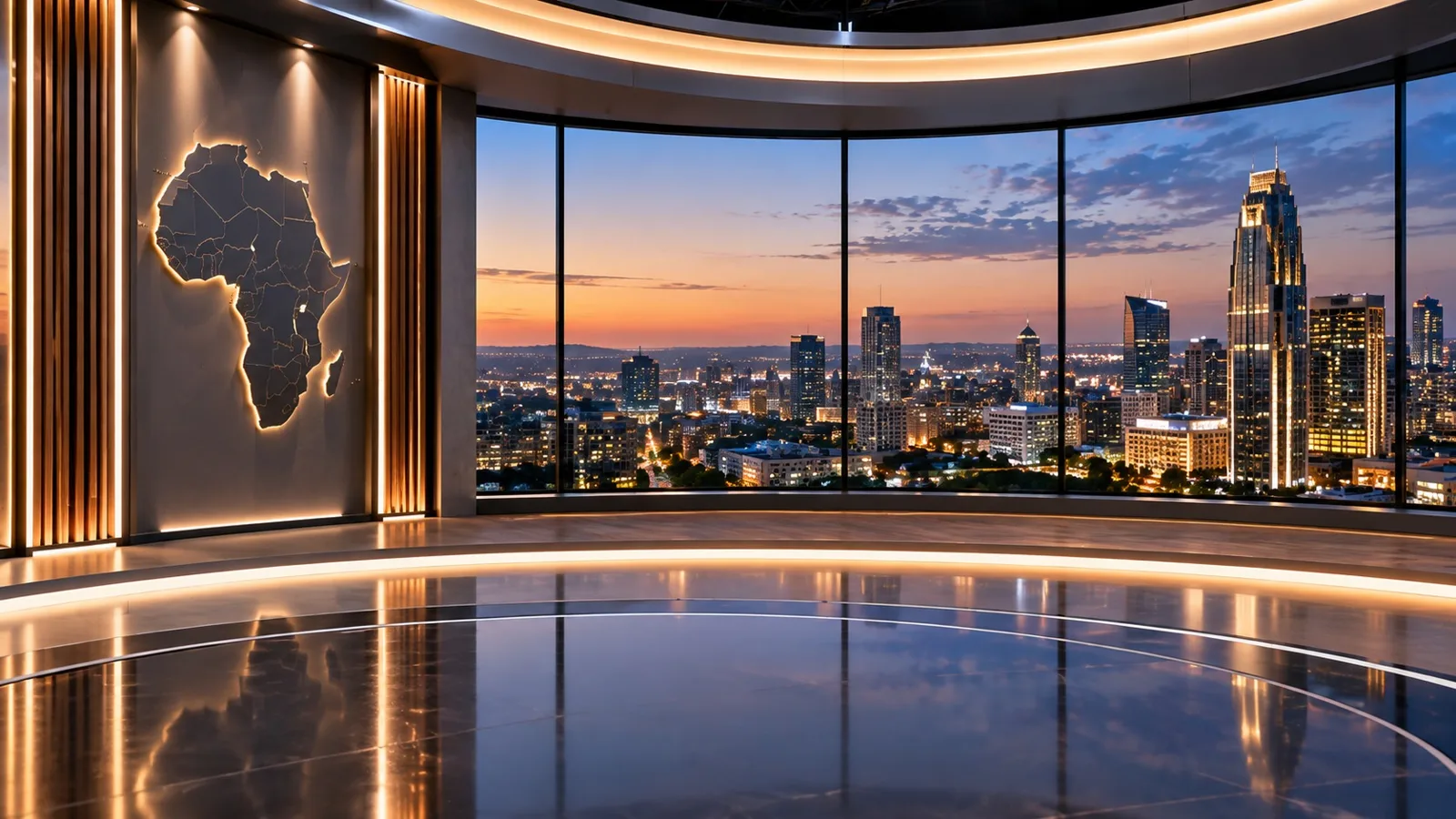
Walk around a real room once with a phone and it becomes a set — not a photograph of a room but the room, with real depth, so the virtual camera and a real camera move can look around a pillar or past a lectern. Your own sanctuary, your own boardroom, a friend’s studio: film it, import it, stand in it.
In practice: the church that cannot broadcast from its own building every week can stand in it every week.
A MacBook Pro, Mac mini Pro or Mac Studio with an M1 Pro or newer and 16 GB or more (not a MacBook Air), or a gaming-class PC with an RTX 3060 or better. The app checks the machine before enabling each Max feature and says plainly when one cannot run, rather than stuttering. Everything in the standard app keeps running on the same machines it runs on today, including Intel Macs back to 2013.
Max is the same download; the licence opens the features.
Models and assets, signed and verified, installed from Settings, removable.
Other Skynat Lives on the network operate the main one.
The larger speech model, on the GPU.
Every strand of hair kept, on green or with no screen at all.
Your real shadow on the set, the set’s light on you, your own shape in relief.
A real room filmed on a phone becomes a set with depth.
A real pan, tilt or zoom moves the room with it.
Every standard feature, every set, every update — including Enhance and the remote cameras.
Max (Enterprise) is sold on the buy page beside the yearly and monthly plans. An existing Skynat Live licence can be upgraded on request; write to us from your dashboard.
Or $19 a month. Affordable, and everything is in it — every update in the year included, nothing renews on its own. Max, with the heavy GPU features, is $599 a year or $79 a month.